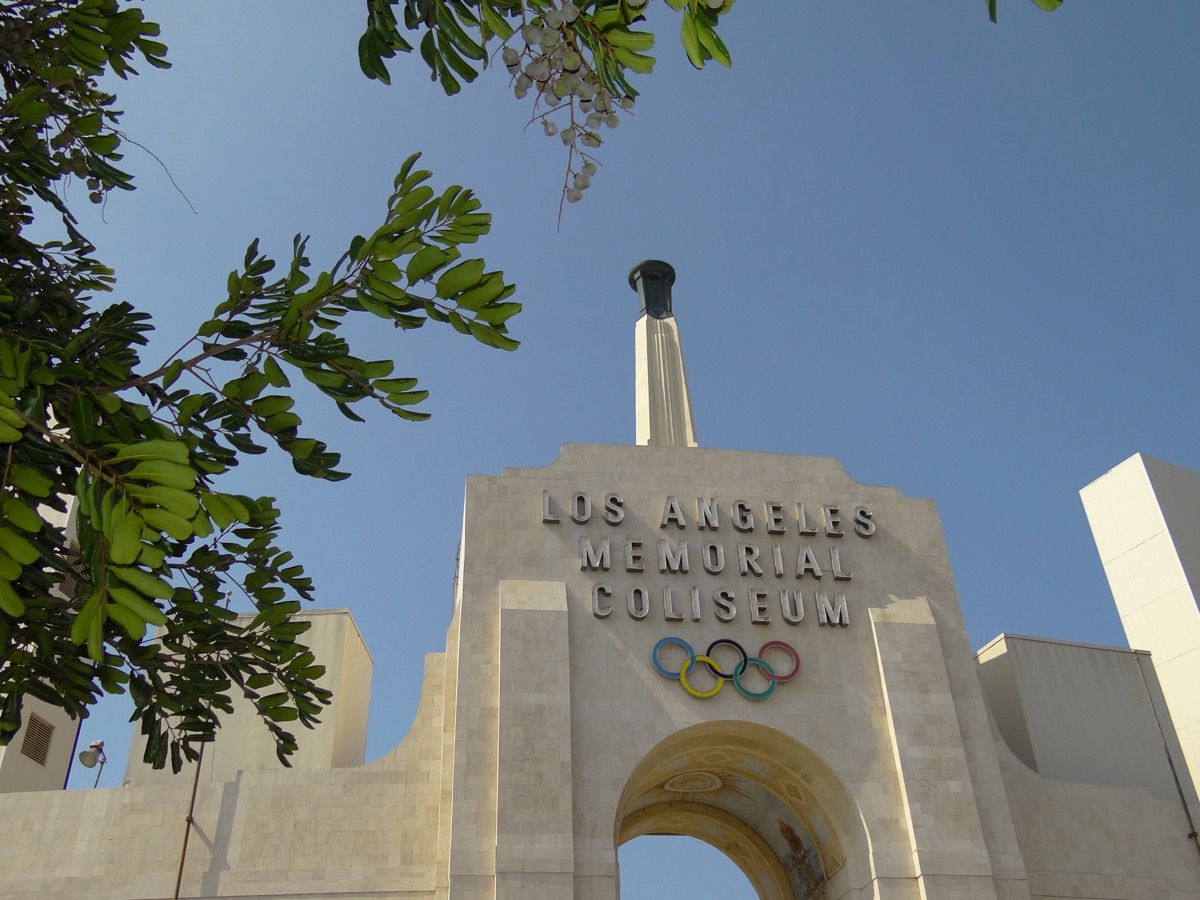
Los Angeles has opened a planning and zoning exemption process for qualifying facilities, installations, uses, and activities tied to the 2028 Olympic and Paralympic Games. Urgency Ordinance 189027 was published and took effect September 9.
The ordinance can cover new construction, additions, alterations or repairs, grading, walls, swimming pools, changes of use, land uses, and signs when a project meets the Games definition and the ordinance's eligibility rules. It does not automatically approve any project. Applicants still must use the prescribed review process, obtain building and other required permits, and satisfy the provisions that the ordinance leaves in force.
Temporary-project applications are due by August 27, 2028. Most temporary approvals end February 27, 2029, while the special operating window for temporary signs ends October 27, 2028.
Which temporary projects can qualify
A qualifying project must provide facilities, installations, uses, or activities that serve athletes, officials, spectators, visitors, or residents at approved competition or noncompetition venues and are necessary to host the Games. The ordinance lists training facilities, security perimeters, broadcast and media centers, transit infrastructure, live sites, and fan zones as examples.
A temporary project at an approved competition venue must file an administrative review application with the Department of City Planning. A temporary project outside an approved competition venue must file the same application and obtain clearance from the City Administrative Officer, Chief Legislative Analyst, Mayor's Office of Major Events, and City Attorney's Office.
Temporary sign projects need those four clearances whether they are inside or outside a competition venue. The ordinance says City Planning and the city liaisons should act on a complete temporary application within 14 business days.
After the Department of Building and Safety accepts a complete building permit plan-check filing, it must notify the affected Council office. A project summary must also be posted in the Council File Management System for at least five calendar days before a permit is issued.
Several categories remain excluded
The exemption is not available to every project associated with the Games. The final ordinance excludes:
- Los Angeles County Metropolitan Transportation Authority 28 by 28 rail projects.
- Previously disapproved projects.
- Hotel development or lodging uses.
- Large-scale cable-guided transportation and other aerial mobility projects.
- Demolition of housing.
- Modifications to projects containing restricted affordable units.
- Demolition, relocation, permanent substantial alteration, or uncleared alteration of designated historic resources.
- Signs proposed by an applicant, advertising company, or property owner currently operating or facilitating an unapproved sign or sign alteration in Los Angeles.
- Permits not expressly listed in the ordinance.
Qualifying projects also remain subject to Measure HLA mobility improvements and the city's special-event permitting requirements and fees. Projects in the Coastal Zone remain subject to coastal development procedures.
Temporary signs have a shorter window
Signs and digital displays approved through this process can operate only from January 1 through October 27, 2028. They cannot become permanent projects and must return to their prior entitlement status and site condition by the end of that window.
The ordinance also sets brightness, operating-hour, refresh-rate, sound, traffic-safety, and emergency-message standards for digital displays. A sign project cannot begin construction, installation, electrification, or conversion until it has the required departmental approvals and permits, and it cannot operate until final inspection approval.
Removal duties reach owners and principals
Temporary projects must be demolished or removed and the site restored by February 27, 2029, unless the city first approves the project through the permanent-project process. Temporary approvals do not create vested rights.
The applicant and each legal or beneficial owner of the project or parcel are jointly and severally responsible for timely removal and restoration. For an entity applicant or owner, the ordinance also identifies officers, directors, members, managers, and principals as potentially subject to civil removal costs or criminal liability when a temporary project is not removed as required.
Permanent relief requires a Council resolution
A project other than a sign may seek permanent relief through a separate City Council resolution. The Council must hold a public hearing, approve the resolution by majority vote, and make required findings, including that the project was essential to the Games, benefits the community beyond the Games, substantially conforms to the General Plan, and complies with the California Environmental Quality Act.
The applicant must apply, and the Council must adopt any permanent-project resolution, before February 27, 2029. The applicant must also file a building permit application with the Department of Building and Safety. A Games connection alone does not make a temporary project permanent.
The temporary filing, sign-removal, and expiration dates are listed on Federal Weekly's compliance calendar, and the ordinance is recorded in the Business Rule Change Tracker.
The practical takeaway
A venue operator, property owner, contractor, sign company, or event vendor planning a Games-related installation in Los Angeles should first confirm that both the proposed work and the permit type are eligible. The team should then map the administrative review, liaison clearances, plan check, public posting, inspections, and any coastal or special-event requirements before relying on the exemption in a schedule.
Contracts and site plans for temporary work should assign responsibility and funding for removal and restoration. A team seeking to retain a nonsign project after the Games should plan for the separate public hearing, Council findings, resolution, environmental review, and building permit process well before the February 27, 2029 deadline.