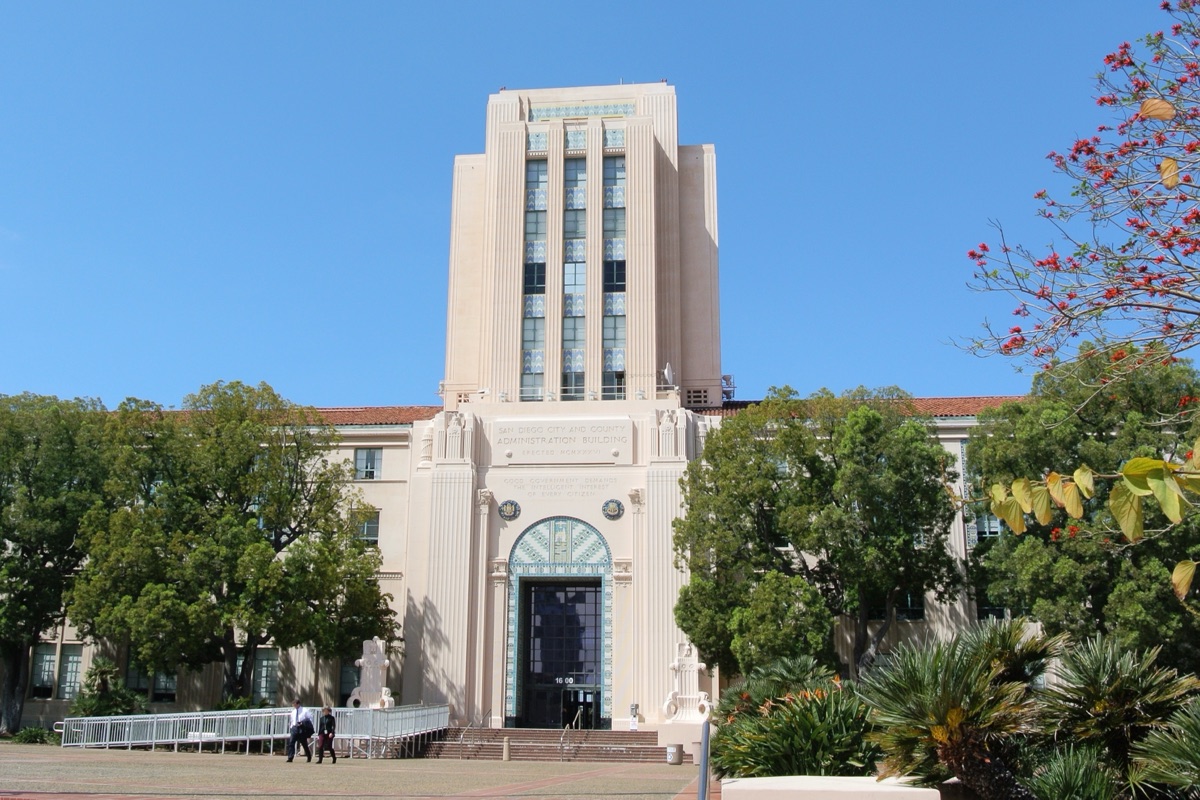
San Diego County has adopted a commercial cannabis licensing program for the unincorporated area, with the first applications opening only to qualifying social-equity applicants and businesses on October 5. Other applicants must wait until October 5, 2029 under the program's three-year equity window.
The Board of Supervisors approved the final package 3-2 on September 2. Minute Order No. 2 records adoption of Ordinance 11020 for cannabis business licensing and operating rules, Ordinance 11021 for the social-equity program, and Ordinance 11022 for the fee schedule. Supervisors Paloma Aguirre, Terra Lawson-Remer, and Monica Montgomery Steppe voted yes; Supervisors Joel Anderson and Jim Desmond voted no.
The licensing and fee ordinances take effect 30 days after passage, on October 2. The application window begins three days later. An application is not permission to open: a business must clear the county's licensing, land-use, inspection, state-license, tax, and seller's-permit gates before the county can issue a license.
The program applies only in unincorporated San Diego County. It does not authorize a cannabis business inside the City of San Diego or another incorporated city, where the applicable city rules continue to control.
Who can apply during the first three years
The initial window is limited to a social-equity participant or a business in which qualifying social-equity applicants hold at least 51 percent ownership.
An individual must be at least 21 and qualify under one of two tiers:
- Tier A: the applicant was incarcerated in San Diego County for a cannabis-related crime that occurred before November 8, 2016.
- Tier B: the applicant was deported, arrested, or convicted in San Diego County for such a crime before that date and has income at or below 80 percent of San Diego County's area median income.
The Office of Equity and Racial Justice will determine eligibility. A person seeking equity status must submit the county's signed application under penalty of perjury. If the application is incomplete, the ordinance gives the applicant 180 calendar days after notice to cure the deficiencies before the application is treated as abandoned.
During the three-year window, an equity participant or business may transfer control or ownership only to a person meeting the same equity-share requirements and only with prior written approval from county staff. At least 50 percent of the county's storefront retail licenses must remain reserved for equity participants or businesses.
Which cannabis businesses the county will license
The land-use framework allows cultivation in agricultural zones; manufacturing, distribution, and testing in industrial zones; and retail, temporary events, and consumption lounges in commercial or industrial zones. A consumption lounge must be part of a retail facility. Microbusinesses can combine permitted activities in agricultural, industrial, or commercial zones, subject to the limits for each location.
The county caps storefront retail at 25 licenses. It does not set a numerical cap on non-storefront retail, cultivation, manufacturing, distribution, microbusinesses, testing laboratories, or temporary events. All facility types must maintain at least a 600-foot buffer from schools, day-care centers, and youth centers.
An applicant should verify zoning before securing a site. The county cannot issue the business license until the location has an approved cannabis land-use entitlement. The applicant must also pass final inspection and obtain occupancy approval, a state cannabis license, enrollment in the county cannabis tax program, a California seller's permit, and any other permits that apply.
What an application and license will cost
Ordinance 11022 sets the following filing amounts:
- $22,218 for cultivation, distribution, manufacturing, testing, or retail.
- $23,080 for storefront retail with a consumption lounge.
- $23,910 for a microbusiness.
- $24,756 for a microbusiness with a consumption lounge.
- $3,682 to $6,502 for a temporary event with up to 50 vendors, plus a $2,695 organizer baseline fee. Events with 51 or more vendors are assessed at the county's approved hourly rate.
The annual renewal fee is $18,536. A late renewal carries an additional fee equal to 50 percent of the applicable licensing fee. These amounts do not include every cost of opening. Land-use review, building and fire approvals, professional plans, state licensing, taxes, site work, and other project-specific requirements can add separate expenses.
County cannabis business licenses last no more than one year. A renewal application is generally due at least 60 calendar days before the current license expires.
What applicants should assemble
The licensing ordinance allows Planning & Development Services to require an entity's formation and ownership records, a 24-hour emergency contact, a site address and parcel number, a state-compliant premises diagram, and proof of ownership or the right to lease and occupy the property. A tenant applicant also needs the property owner's written consent to cannabis operations.
The operating package includes a professionally prepared security plan, a lighting plan, a business plan, proof of commercial general liability insurance, a current operating budget, a neighborhood compatibility plan, and a site-specific odor mitigation plan. The neighborhood plan must address possible noise, light, public consumption, loitering, litter, and traffic effects and identify a community contact.
The county may reject an application that misses the designated deadline, omits required materials, or is substantially incomplete. A complete application still must pass the county's investigation and all issuance conditions.
Businesses can track the October dates on Federal Weekly's compliance calendar, review the Business Rule Change Tracker record, and use the unincorporated San Diego County reference page for the jurisdiction boundary.
The practical takeaway
A prospective social-equity applicant should first document Tier A or Tier B eligibility and confirm that equity applicants will hold at least 51 percent of the business. Before committing to a property, confirm that the parcel is in unincorporated San Diego County, supports the proposed cannabis use, and can satisfy the 600-foot buffer.
Next, assemble the ownership and occupancy records, premises diagram, security, lighting, operating, neighborhood, and odor plans required by the licensing ordinance. Budget the county license fee separately from land-use, construction, inspection, state-license, tax, and professional-service costs.
Applicants outside the social-equity program cannot file for a county cannabis business license during the opening window. Their stated application date is October 5, 2029 unless the county changes the adopted rules before then.