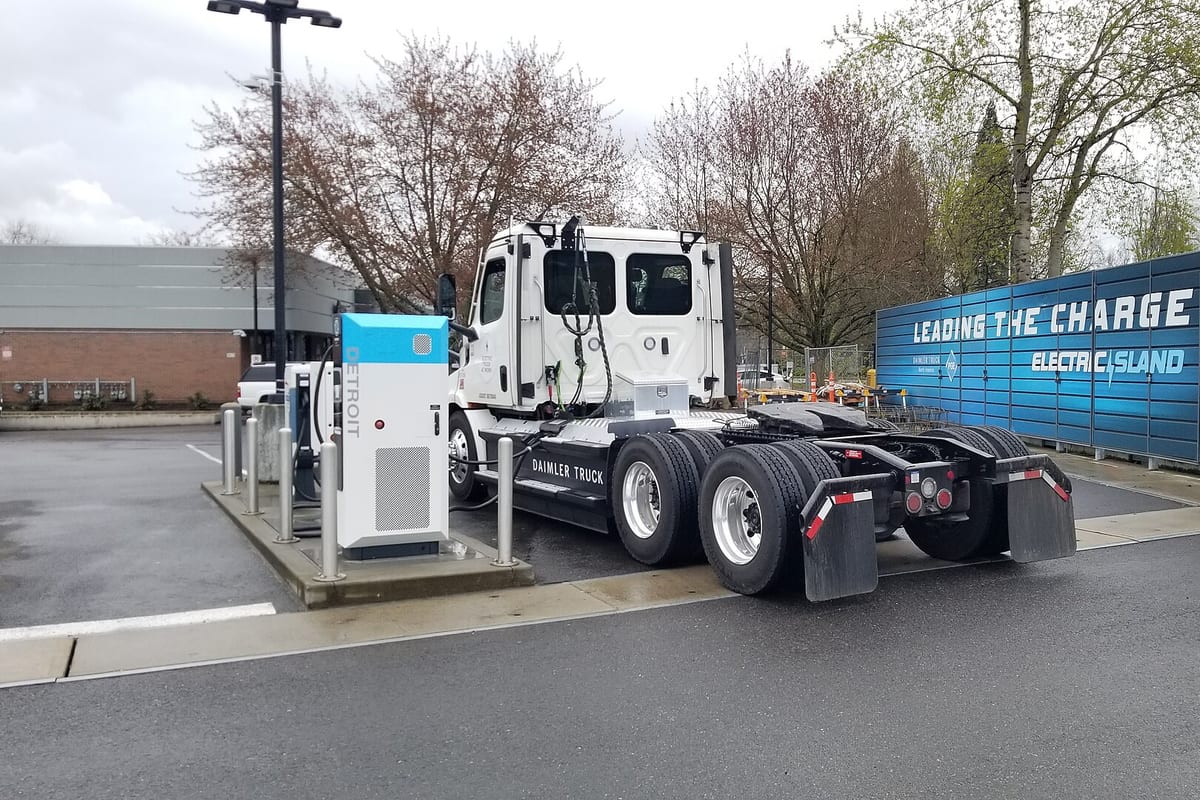
South Coast air regulators approved a $73.1 million first-year grant round for zero-emission trucks and the charging or hydrogen-fueling equipment that supports them. Eligible warehouse, fleet, and infrastructure operators can begin preparing applications September 22 and submit them beginning October 13.
The South Coast Air Quality Management District says complete applications will be reviewed in the order received. The application period closes at noon Pacific on December 15, but funding can be reserved earlier within a project's geographic funding area. Eligible applications received after an area's money is reserved will be placed on a first-come waitlist.
The money comes from mitigation fees paid by warehouse operators under Rule 2305, the Warehouse Actions and Investments to Reduce Emissions Program. The grant round is a funding opportunity, not a new Rule 2305 compliance path. Equipment purchased with these funds cannot earn WAIRE acquisition points, although the program says later use of funded trucks or equipment may earn operating points.
Who can apply
The program is open to existing warehouse operators, fleet operators, and zero-emission truck charging or fueling infrastructure operators serving warehouses in the South Coast AQMD region. Dealerships are excluded from truck-purchase eligibility.
Truck grants cover new battery-electric or hydrogen-fuel-cell Class 4 through Class 8 on-road trucks, including yard trucks, and new zero-emission off-road yard trucks. The applicant must buy the vehicle rather than lease it, retain ownership throughout the purchase, delivery, and three-year operating period, and place it in service within 18 months after the agreement is executed unless the program administrator approves more time.
Infrastructure grants cover new or expanded electric charging and hydrogen fueling for Class 4 or larger trucks and yard trucks that serve warehouses. They may also cover conversion from existing non-zero-emission fueling equipment, but not subsurface contamination testing or cleanup. A project designed only for light-duty vehicles is not eligible.
An infrastructure applicant must own or control the site through the construction period and three-year operating term. The warehouse served by the project must already be operating or must have begun construction before the September 4 program release, such as by receiving an approved building permit. A planned warehouse that had not begun construction by then is not eligible.
How much funding is available
The program sets these maximum awards per truck:
- Class 4 and 5 on-road or yard trucks: $60,000.
- Class 6 and 7 on-road or yard trucks: $85,000.
- Class 8 battery-electric trucks: $120,000.
- Class 8 hydrogen-fuel-cell trucks: $240,000.
- Zero-emission off-road yard trucks: $120,000.
Electric charging equipment and infrastructure can receive up to $300 per kilowatt of output. Hydrogen fueling equipment and infrastructure can receive up to $8,000 per kilogram per day of capacity.
Applicants may combine this award with other incentive programs when the other program allows it. Total incentives from all sources cannot exceed 85 percent of eligible project cost. For an infrastructure award, at least half of the WAIRE funding must be applied to eligible equipment rather than installation or other direct project costs.
Funding stays tied to warehouse areas
The $73,135,300 is divided among Source Receptor Areas in Los Angeles County, Orange County, Riverside County, and San Bernardino County based on where warehouse mitigation fees were collected. The current county totals are $20,639,500 for Los Angeles County, $3,657,000 for Orange County, $16,115,800 for Riverside County, and $32,723,000 for San Bernardino County.
Each truck or infrastructure project requests money from one Source Receptor Area. A funded on-road truck must be based in that area or make at least 100 trips per year to warehouses there. A yard truck must be based at a warehouse in the area, and funded infrastructure must be located there. Those geographic conditions continue for the project's three-year operating period.
If an area receives no eligible projects, its money may be considered for an eligible project in an adjacent area within the same county after the application period ends. Unspent money otherwise carries into a later program year for the area where it was collected.
What infrastructure applicants need to document
Charging and hydrogen projects must serve Class 4 or larger warehouse-related vehicles. Except for equipment used only by off-road yard trucks, funded infrastructure must be publicly accessible or operate as a shared station. Each funded electric connector must provide at least 24 kilowatts of continuous direct-current fast-charging or megawatt-charging output.
The application must document site control, expected warehouse-related use, and a commitment from the applicable utility that it can provide sufficient electrical service. Infrastructure construction must use a skilled and trained workforce, and the project must be registered with the California Department of Industrial Relations and comply with applicable prevailing-wage requirements.
How to prepare for the October 13 opening
South Coast AQMD's online grant system opens at noon Pacific on September 22 so applicants can create, save, and review their materials. It begins accepting submissions at noon Pacific on October 13.
A complete application includes the project forms, business-information forms, required disclosures and certifications, and supporting records. The program announcement requires vendor quotes dated within 90 days of submission. Truck applicants that will meet the geographic test through warehouse trips rather than domicile need current delivery or related contracts and an estimate of annual trips and warehouse stops.
Applicants should not place a purchase order or make another purchase commitment before the South Coast AQMD Governing Board approves the award. The announcement says commitments made after board approval but before a final agreement are at the applicant's own risk.
The application portal closes at noon Pacific on December 15 and will not accept a late filing. Because awards are first-come within each funded area, the filing date can matter before the overall deadline. The drafting, opening, and closing dates are listed on Federal Weekly's compliance calendar, and the funding action is recorded in the Business Rule Change Tracker.
The practical takeaway
An interested warehouse or fleet operator should first locate the project in the agency's Source Receptor Area map and check how much money remains assigned to that area. Then confirm that the proposed truck or infrastructure meets the size, warehouse-service, ownership, geographic, and three-year operating requirements.
Use the September 22 drafting period to register for the grant system, obtain current vendor quotes, assemble the required business forms, and document warehouse trips or site control. Infrastructure applicants should also secure the utility commitment and confirm the labor, permit, public-access, and equipment-output conditions before October 13.
This is a competitive first-come program with project-specific review, not a guaranteed rebate. A complete application must be submitted through the official grant system by noon Pacific on December 15, and earlier filing may be necessary before the applicable area's funding is reserved.